Full Stack Java Projects With Source Code for 4th Year Students - Hyderabad - Raise Tech
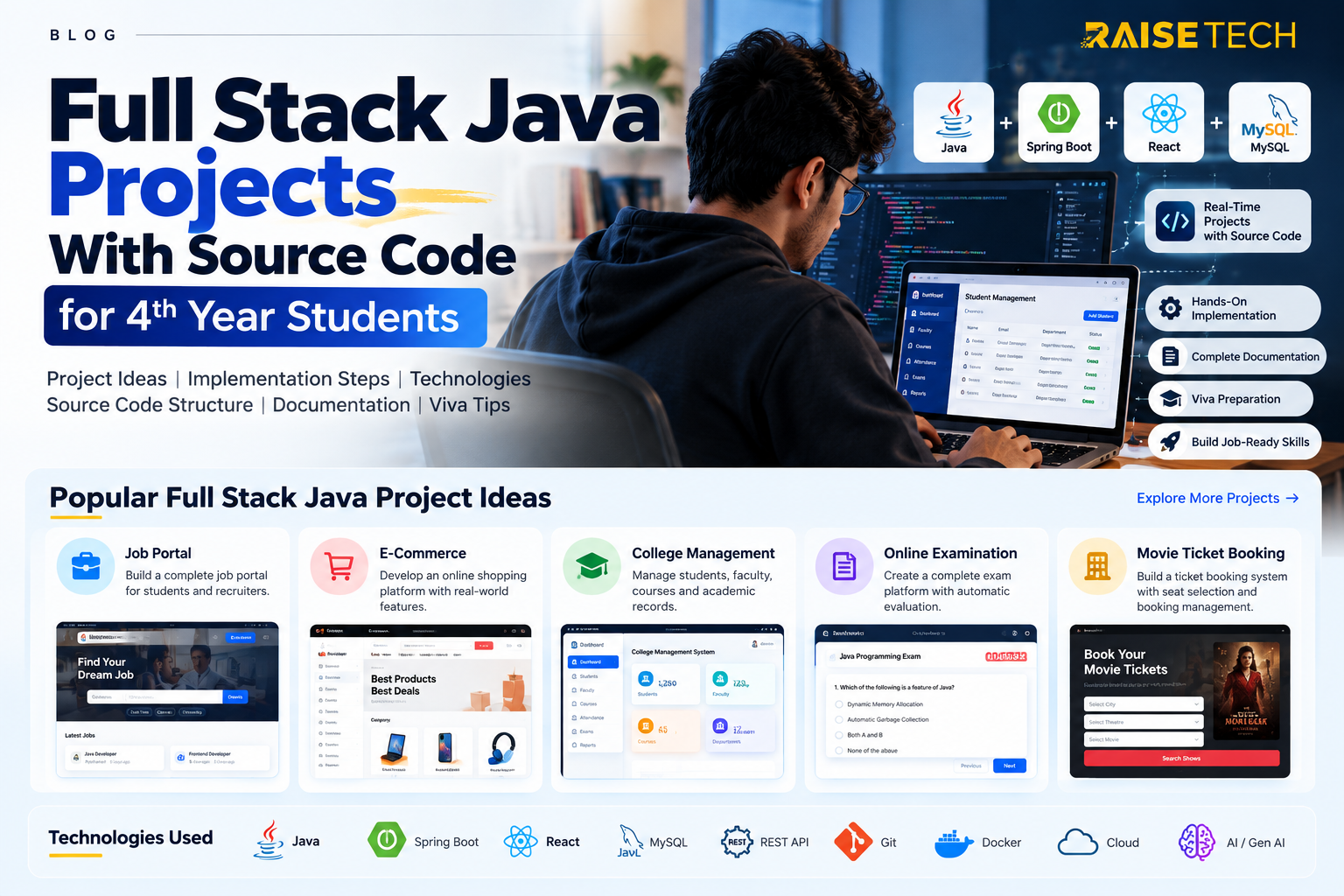
If you are looking for Full Stack Java projects with source code for 4th-year students, this guide explains project ideas, technologies, source code requirements and the importance of hands-on implementation. Raise Tech provides Java Full Stack training and hands-on project guidance in Hyderabad and Ameerpet for students who want to understand project development step by step.
Why Full Stack Java Projects Are Popular Among 4th-Year Students
Final-year students often need to demonstrate their technical knowledge through a practical project. A Full Stack Java project combines backend programming, frontend development, database management and application integration.
Java is widely used for building enterprise and web applications. Students can therefore use Java Full Stack projects to practice multiple development concepts in one application.
A typical project can include:
- Java programming
- Spring Boot
- REST APIs
- HTML and CSS
- JavaScript
- React
- MySQL
- Database integration
- Authentication and authorization
- Git and GitHub
This combination gives students an opportunity to understand how different parts of a web application work together.
Students who want to build these skills through structured training can explore Java Full Stack Training in Hyderabad from Raise Tech. The training can help learners understand the technologies required to develop and explain a complete application.
What Is a Full Stack Java Project?
A Full Stack Java project is a web application that uses Java technologies for backend development and frontend technologies for the user interface.
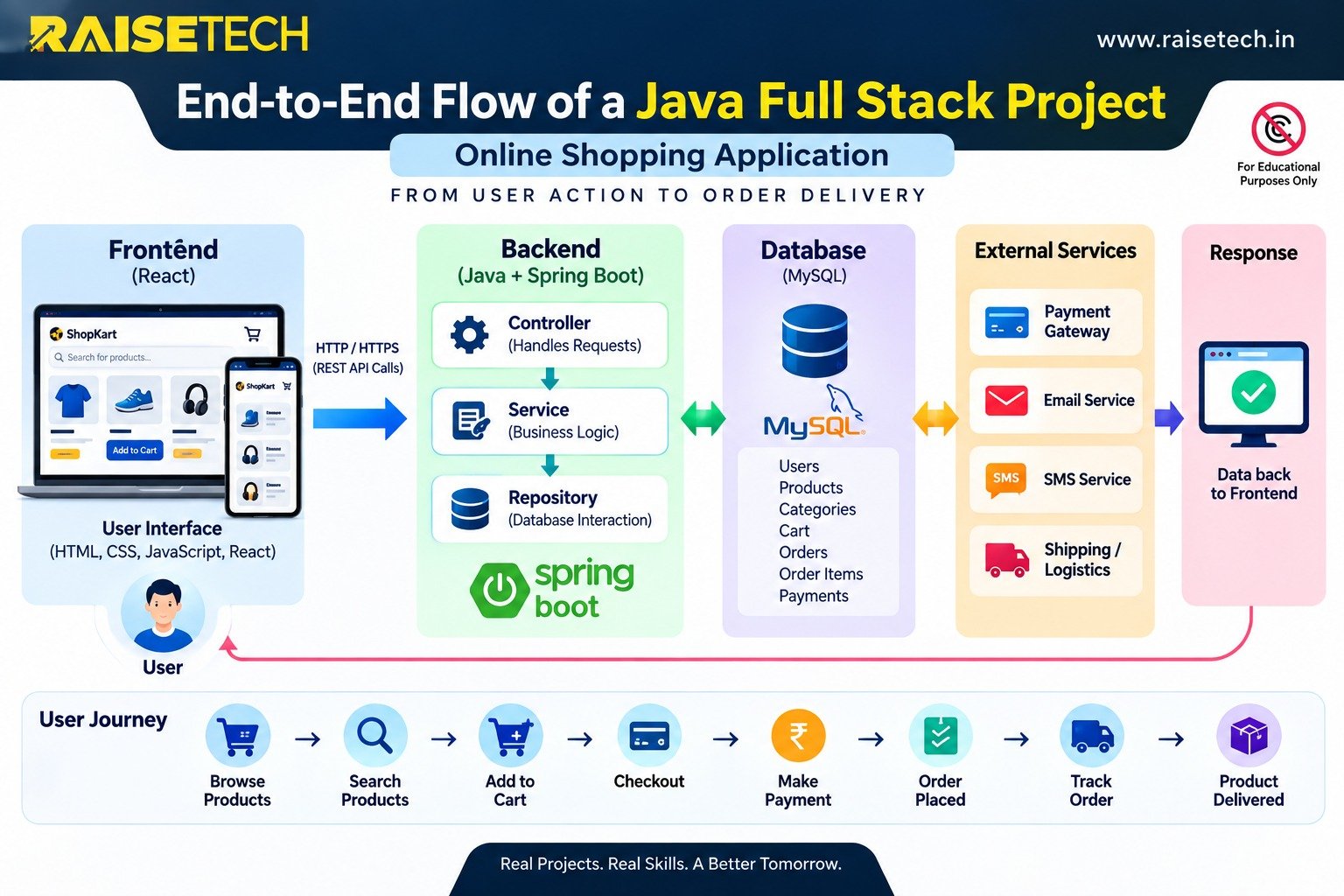
For example, Spring Boot can handle the backend logic and REST APIs. MySQL can store application data. React or another frontend technology can provide the user interface.
The complete application may follow a structure such as:
Understanding this flow is more useful than simply downloading a project and submitting the source code. Students should learn how each layer works and how the components communicate with one another.
Full Stack Java Projects With Source Code for 4th-Year Students
Students can choose a project based on their academic requirements, technical skills and interests. The following Full Stack Java project ideas can be developed as academic or portfolio projects with proper implementation and documentation.
1. Online Learning Management System
An Online Learning Management System can allow students to register, log in, view courses, access learning materials and track their progress.
Possible modules include:
- Student registration
- Student login
- Course management
- Learning materials
- Admin dashboard
- Progress tracking
- Search and filtering
This project gives students experience with authentication, database relationships, APIs and role-based access.
2. Online E-Commerce Application
An E-Commerce application is another practical Full Stack Java project. Students can build product listings, shopping cart functionality and order management.
Possible features include:
- User registration and login
- Product management
- Product search
- Shopping cart
- Order management
- Customer dashboard
- Admin dashboard
The project can help students understand how frontend screens communicate with backend APIs and how application data is stored in a database.
3. Employee Management System
An Employee Management System can be designed to manage employee records, departments, attendance information and other organizational data.
Students can implement CRUD operations, database relationships and role-based access.
This project is suitable for students who want to practice Spring Boot, REST APIs and MySQL.
4. Hospital Management System
A Hospital Management System can manage patients, doctors, appointments and medical service information.
Possible modules include:
- Patient registration
- Doctor management
- Appointment scheduling
- Patient records
- Admin management
- Search functionality
The project can help students understand database design and multi-module application development.
5. Online Job Portal
An Online Job Portal can connect job seekers and employers through a web application.
Students can create separate user roles for candidates, recruiters and administrators.
Useful features include:
- Candidate registration
- Recruiter registration
- Job posting
- Job search
- Job applications
- Resume management
- Admin dashboard
This project provides opportunities to practice authentication, search, database relationships and REST API development.
What Technologies Should a 4th-Year Java Project Use?
The technology stack should match the student’s project requirements and learning level. A modern Java Full Stack project can use several technologies together.
| Layer | Suggested Technology |
|---|---|
| Programming | Java |
| Backend | Spring Boot |
| API | REST API |
| Frontend | HTML, CSS, JavaScript or React |
| Database | MySQL |
| Version Control | Git and GitHub |
| Build Tool | Maven |
Students do not need to use every technology in one project. Instead, select a stack that supports the project requirements and can be explained confidently during the project presentation.
Students interested in modern Java development with artificial intelligence concepts can also explore Full Stack Java With AI Training in Hyderabad from Raise Tech.
Why Source Code Alone Is Not Enough
Finding Java projects with source code can help students understand project structure. However, source code alone does not provide complete project knowledge.
Students should understand how the application works from the frontend to the database.
Before submitting a project, make sure you can explain:
- Why you selected the project
- How the application works
- How the database is designed
- How REST APIs are created
- How the frontend communicates with the backend
- How authentication works
- How errors are handled
- How the application can be deployed
This understanding can also make project demonstrations and technical discussions easier.
What Should a Complete Final-Year Project Package Include?
A complete project package should contain more than application source code. Students should prepare the supporting documents and materials required for their academic project.
A project package can include:
- Complete source code
- Project documentation
- Database scripts
- Database design
- System architecture
- API documentation
- Installation instructions
- Project presentation
- Project report
- Testing details
- Project demonstration
Keeping these materials organized can help students understand and present their project more effectively.
Java Full Stack Project Implementation in Hyderabad
Students looking for Java project implementation in Hyderabad can consider hands-on project guidance instead of depending only on ready-made source code.
Raise Tech provides Java Full Stack training and hands-on project guidance in Ameerpet, Hyderabad. Students can learn application development concepts and understand how different technologies connect within a project.
As a Java Full Stack course provider and project implementation provider, Raise Tech can help students work through important development areas such as Java programming, Spring Boot, REST APIs, frontend development, database integration and project workflows.
Hands-on project implementation can help students understand the development process instead of simply collecting or downloading source code. Students can work on project concepts, understand the application structure and prepare to explain their implementation.
If you are looking for Java Full Stack training or project guidance in Hyderabad, you can contact Raise Tech to discuss your course and project requirements.
Why Hands-On Project Development Matters
Building a project yourself gives you opportunities to solve practical development problems.
During implementation, you may need to debug code, modify database queries, fix API errors and improve application functionality.
This process can help you develop skills that are difficult to gain by simply reading source code.
Hands-on development can help students practice:
- Problem solving
- Debugging
- Database design
- API development
- Frontend integration
- Code organization
- Testing
- Project presentation
With project guidance from Raise Tech, students in Hyderabad and Ameerpet can focus on understanding the development workflow and preparing a project that they can explain during academic presentations.
Java Full Stack Project + Career Preparation
A final-year project can also become a useful portfolio project when it is developed properly.
Students can include selected project details in their resume and explain the technologies they used during interviews.
When preparing your project for interviews, be ready to explain:
- Project objective
- Your role in the project
- Technology stack
- Database structure
- Backend architecture
- API implementation
- Challenges you faced
- Solutions you implemented
A project becomes more valuable when you can clearly explain both the technical implementation and the problem it solves.
Frequently Asked Questions
What are the best Full Stack Java projects for 4th-year students?
Popular project ideas include Online Learning Management Systems, E-Commerce applications, Employee Management Systems, Hospital Management Systems and Online Job Portals. Choose a project that matches your skills and academic requirements.
Can I use source code for my final-year Java project?
Source code can be useful for learning and understanding project structure. However, students should understand, modify, test and implement the project rather than submitting unfamiliar code.
Which technologies should I learn for a Java Full Stack project?
Start with Java and then learn Spring Boot, REST APIs, SQL, MySQL and frontend technologies such as HTML, CSS, JavaScript or React.
Are Java Full Stack projects useful for resumes?
Yes. A well-developed project can demonstrate your practical knowledge of Java, backend development, databases, APIs and frontend integration.
Where can I get Java Full Stack project guidance in Hyderabad?
Students in Hyderabad and Ameerpet can explore Java Full Stack training and project implementation support through Raise Tech. The institute provides course training along with hands-on project learning to help students understand their implementation.
You can also contact Raise Tech for information about Java Full Stack courses and project guidance.
Should I build a project from scratch?
Building the project yourself can help you understand the architecture, code and development process. You can also study existing source code to learn implementation patterns.
Can Raise Tech provide Java Full Stack project guidance?
Yes. Raise Tech provides Java Full Stack training and hands-on project guidance in Ameerpet and Hyderabad. Students can learn the required technologies and understand the implementation of Full Stack Java projects.
Final Takeaway
Full Stack Java Projects With Source Code can be a useful starting point for 4th-year students who want to understand application development. However, the main goal should be learning how the project works rather than simply collecting source code.
Choose a project that you can understand, implement and explain. Learn Java, Spring Boot, REST APIs, databases and frontend development step by step.
If you are based in Hyderabad or Ameerpet, Raise Tech can provide Java Full Stack course training and hands-on project guidance to help you practice these skills through practical application development.
Explore the Java Full Stack Training in Hyderabad from Raise Tech to learn more about the course and technology stack.
Build the project, understand the code, test the application and prepare to explain your work. This approach can help you turn a final-year academic project into a practical learning experience.
For course details, project implementation guidance or other requirements, contact Raise Tech.